
The Professional’s Guide to 1000V Insulated Hand Tools
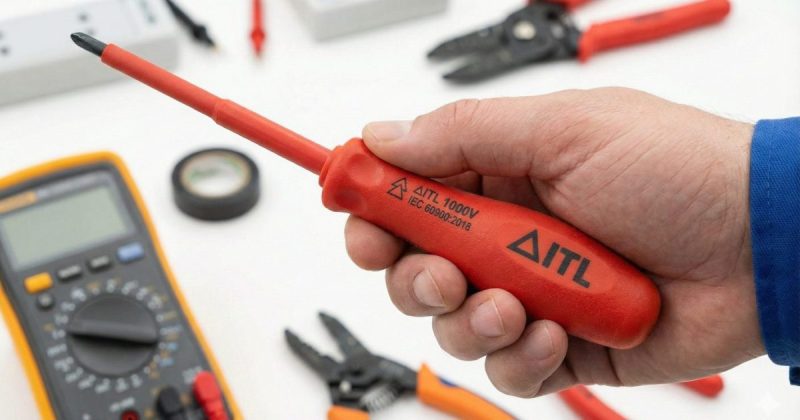
Choosing the right insulated hand tools isn’t just about ticking a compliance box. It’s about trusting the kit in your bag when you are working on live installations. Whether you are an apprentice building your first kit or a seasoned pro replacing worn-out gear, the technical specs matter.
At Insulated Hand Tools, we understand the demands of the UK trade. We believe that buying safety equipment should be done with a clear understanding of the technical specifications. You aren’t just buying a screwdriver; you’re buying a tool specifically engineered for safety.
This guide focuses on the data, safety standards, and materials that make a high-quality insulated tool.
What are the key features to look for in insulated hand tools?
To ensure maximum safety and durability, look for tools certified to IEC 60900 and VDE standards, rated for 1,000V AC / 1,500V DC.
Regarding materials, you generally have two reliable choices: high-quality dipped insulation or injection moulded Nylon 11. Prioritise Nylon 11 for superior impact resistance and bonding in extreme temperatures, or choose reputable VDE-dipped tools for proven, cost-effective safety.
Inspection is just as important as selection. Not sure what to look for? Read our guide on the 5 Signs Your Insulated Tools Are Unsafe and Need Replacing.
Understanding the Standards: VDE and IEC 60900
You will often see VDE stamped on handles, but it is important to know what that actually guarantees. The international standard for insulated hand tools is IEC 60900. This standard dictates that tools must provide protection up to 1,000V AC and 1,500V DC.
The Marking Checklist
When inspecting a tool, look for these specific markings required by the Electricity at Work Regulations 1989 and BS 7671 compliance:
- The Double Triangle symbol (international symbol for live working).
- 1000V rating.
- The year of manufacture.
- Reference to standard IEC 60900.
Material Matters: Nylon 11 vs. Dipped Insulation
This is where understanding your tool’s construction is vital. Not all insulation is created equal, and the right choice depends on your budget and working environment.
Dipped Insulation
- The Pros: This is the industry standard for many electricians. It provides fully compliant VDE safety at a competitive price point.
- The Caution: Beware of cheap, generic dipped tools where the insulation can become brittle over time or peel away. We only stock high-quality dipped tools from reputable manufacturers like Boddingtons, ensuring you get reliable IEC 60900 protection that lasts.
Injection Moulded Nylon 11
For those working in harsher environments, we offer ITL’s premium range, manufactured using injection moulded Nylon 11 thermoplastic.
- Chemical Bonding: The Nylon 11 is injection moulded directly onto the tool. It chemically bonds to the steel and effectively becomes one piece. It cannot peel off.
- Impact Resistance: Nylon 11 is harder and more durable. It achieves Category C Impact Resistance, meaning it stays intact even in freezing conditions.
- Temperature Tolerance: While standard insulation can struggle in extremes, Nylon 11 maintains its integrity from -40°C up to +70°C, making it ideal for unheated sites in winter or industrial boiler rooms.
Building Your Essential Kit
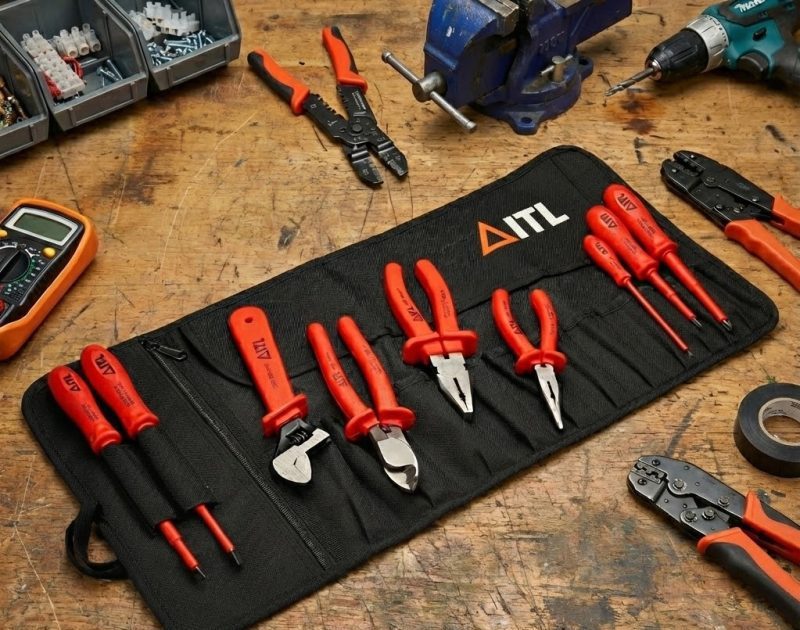
Building an insulated toolkit requires a strategic approach. You need tools that cover the majority of termination and cutting tasks without weighing you down.
Insulated Screwdrivers
Precision is key. Look for slim-line shafts that allow access to recessed breakers and RCBOs without damaging the insulation. Our ITL range features the Nylon 11 coating all the way down to the tip for maximum safety without compromising accessibility, while our Boddingtons range offers excellent ergonomic grip and robust insulation.
Selecting the Right Tip:
- VDE Slim / SlimFix: Essential for modern installation work. These feature reduced insulation diameter near the tip, allowing access to recessed screws found in MCBs, RCBOs, and terminals without the insulation obstructing entry.
- Phillips: The classic cross-head. Use the correct size (PH1, PH2, etc.) to avoid “cam-out” and damage.
- Pozidriv (PZ): Similar to Phillips but with extra intersecting slots for better grip. This is standard in UK manufactured equipment. Warning: Using a Phillips driver in a Pozidriv screw (or vice-versa) leads to “cam-out”, poor fit, and damaged screw heads. Always match the PZ size (PZ1, PZ2) to the screw.
- Slotted (Flathead): Ensure the tip width matches the screw slot precisely. Parallel tips are often better for terminal blocks than flared tips as they fit more securely within the deep recess of a terminal.
Pliers and Cutters
High-leverage design is essential for cutting widely used UK cables. Ensure the cutting edges are induction hardened to prevent dulling. Check out our insulated pliers and cutters to find tools that deliver superior cutting power without compromising on safety.
Matching the Plier to the Task:
- Combination Pliers: The versatile all-rounder. Use these for gripping flat or round objects, twisting wires, and basic cutting of softer copper wires.
- Long Nose (Snipe Nose) Pliers: Excellent for precision work in tight spaces, forming loops in wires for termination, and holding small components.
- Side Cutters (Diagonal Cutters): Specifically designed for cleanly cutting copper and aluminium wires. Pro Tip: Never use these on steel wire or screws as it will damage the cutting edge.
- Cable Shears: For larger diameter copper and aluminium cables, shears provide more leverage and a cleaner cut than standard plier cutters, preventing the cable from being crushed during the cut.
Spanners and Sockets
Tight busbar chambers require tools that fit. Bulky insulation on ring spanners is a nightmare in confined spaces. Our insulated spanners utilise strong insulation materials to keep the profile slim without reducing protection. Whether it’s M12 bolts or larger termination work, you get maximum torque with verified 1,000V safety.
Cable Knives
Stripping large cables like SWA demands control. A slip here can be catastrophic. Our insulated knives and saws feature moulded handles for superior grip. Look for curved blades with a protective “shoe” to strip outer sheaths without nicking the inner conductor insulation.
We are so confident in the durability of the Nylon 11 bonding and tool quality that we offer a Lifetime Warranty on our ITL range.
Key Takeaways for Buyers
Before you checkout, ensure your tools meet these five criteria:
- Certified Voltage: Rated to 1,000V AC / 1,500V DC and tested to 10,000V.
- Material: Nylon 11 for maximum durability and impact resistance, or high-quality dipped insulation for reliable, standard use. Avoid cheap, generic PVC.
- Durability: Look for impact resistance suitable for your working environment, e.g. Category C for cold environments.
- Origin: Traceable manufacturing with a Lifetime Warranty.
- Traceability: Clearly marked with the double triangle symbol and manufacturing year.
Maintenance: Daily Inspection Checklist
Even the best tools need checking before every use. Always inspect for:
- Nicks, cuts, or cracks in the insulation.
- Burns or heat damage.
- Excessive wear on the tips or gripping surfaces.
- If the insulation is compromised in any way, the tool must be discarded and replaced immediately.
Your hand tools are an investment in your career and your life. By choosing tools that adhere to IEC 60900 and are maintained correctly, you ensure that you go home safe every day.
We are committed to providing the UK trade with tools that exceed these standards. From our high-leverage pliers to our precision screwdrivers, every item we stock is designed to perform in the real world.
Ready to upgrade your kit with tools you can trust?
Don’t compromise on safety. Explore our complete range of 1,000V VDE insulated tools, all backed by our Lifetime Warranty.
Disclaimer: This blog post provides general information on electrical safety and tool standards. Always refer to specific site procedures, risk assessments, and relevant regulations (such as the UK’s Electricity at Work Regulations 1989). Seek expert advice for your particular situation. Safe work practices should always be determined by qualified personnel.